
I DIED IN AUSCHWITZ
Feature Film Screenplay Synopsis
ABOUT THE SCREENPLAY
Across wartime Europe and postwar America, the lives of two Holocaust survivors, a German army officer with Jewish ancestry, and an African American woman intersect in a story of survival, identity, and the enduring consequences of hatred.
I Died in Auschwitz is inspired by the lived experiences of Holocaust survivors — including members of the writer’s own family — and by years of immersion in survivor testimony and historical research. Adapted from Roger Grunwald’s acclaimed solo stage drama of the same name, the film interweaves fictional characters and historical realities to explore how trauma, moral compromise, and racial hatred reverberate across continents and generations.
Moving between prewar Poland, Nazi-occupied Europe, the Eastern Front, and postwar America, the film follows interconnected lives shaped by the long shadow of history.
At the center is Schmuel Berkowicz, a Polish Jewish youth growing up in Bialystok alongside his childhood friends: Lola, a Jewish girl, and Bronek, a Catholic boy. Their close-knit world is shattered by the German invasion. On June 27, 1941 — a day that would come to be known as “Red Friday” — Jewish families are driven from their homes and murdered in the streets, while neighbors stand by in silence or join in the violence.
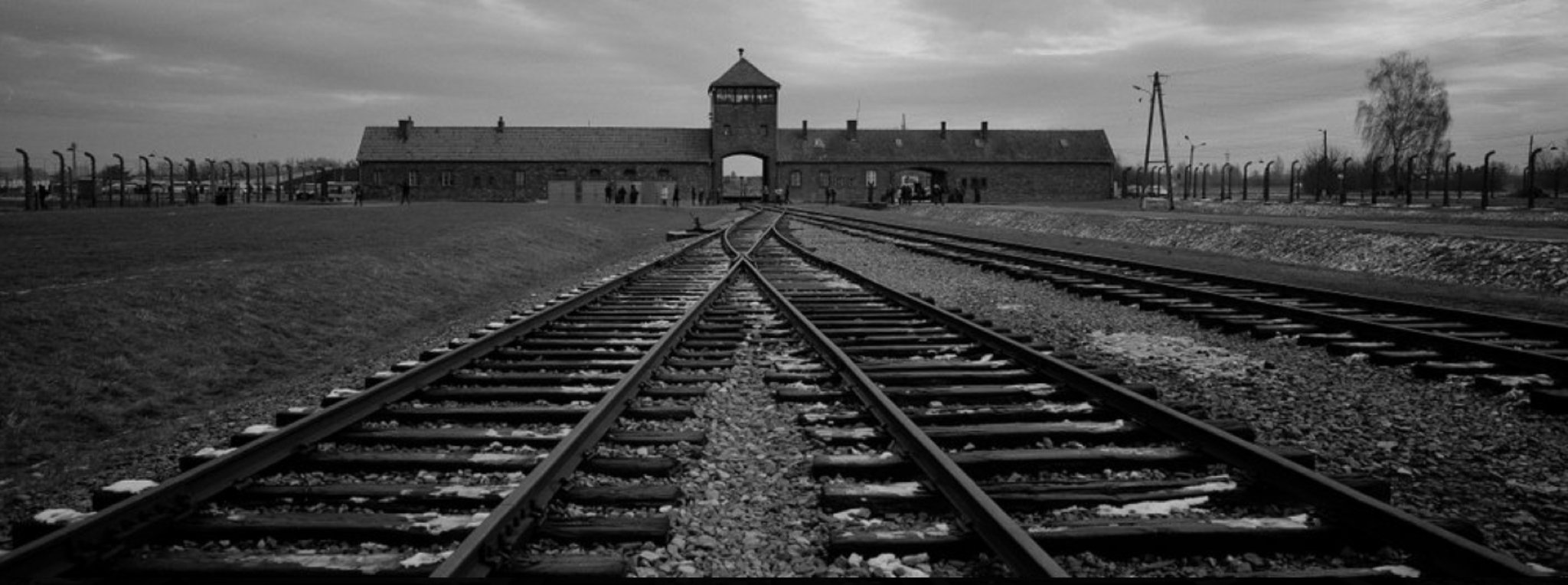
In an atrocity singular in its scale and horror, more than a thousand Jewish men and boys are locked inside Bialystok’s Great Synagogue and burned alive. Schmuel survives for a time by hiding but is eventually deported to Auschwitz, where survival depends on instinct, endurance, and the arbitrary mercy of luck.
Liberation, however, does not bring inner peace.
The film intercuts Schmuel’s wartime survival with his later life in New York, where he struggles to build stability while haunted by memory and loss.
In a displaced persons camp after the war, Schmuel meets Gerda, another Auschwitz survivor. Two shattered lives who recognize something in one another and form a bond that becomes marriage. Their union offers protection from the past and the fragile possibility of rebuilding. A son binds them together.
While on a family vacation at a Catskills resort in the late 1950s, Gerda signs up—impulsively and with no prior experience—to perform at an amateur comedy night. What begins as a tentative attempt at humor shifts when she draws on her experience in Auschwitz. The audience doesn’t know how to respond. Laughter falters, then disappears as the reality behind her performance becomes clear. By giving voice to what she has long kept buried, Gerda breaks a silence she has carried for years, attempting to reclaim control over memories that refuse to loosen their hold.
Struggling with emotional detachment and a growing sense of dislocation, Schmuel begins an intense relationship with Lorna, an African American woman shaped by poverty, racism, and violence. But their relationship unfolds within a society that restricts her at every turn.
As Schmuel struggles to build a life beyond the hatred that destroyed his entire family, Lorna faces the daily realities of entrenched racism in mid-century America. Their bond exposes unsettling parallels between the hatreds of Nazi Germany and the inequities of the United States — and the limits of what either of them can escape.
Their connection, however, cannot withstand the weight of the past — or the violent control another man exerts over Lorna’s life. When the relationship collapses, Schmuel is left unmoored — unable to let go, returning again and again, driven by a longing he cannot understand.
In Nazi-occupied Europe, a parallel story unfolds under increasingly perilous conditions.
Christoph, a rising officer in the German army, harbors a dangerous contradiction: his father, Hugo, was born of two Jewish parents. Despite this, he is an ardent German nationalist and raises Christoph to value loyalty, discipline, obedience, and, above all, service to the Fatherland. Determined to prove himself worthy, Christoph builds a promising military career. But as Nazi racial laws grow more restrictive, he finds himself in a precarious position—serving a regime whose ideology could ultimately condemn him and his parents.
Klara, a young Jewish artist from Frankfurt, has already lost her father to the Nazi regime and lives as a refugee in occupied Paris. Resourceful and perceptive, she survives through her work while remaining dependent on a French doctor who supports her financially but exploits his power over her.
When Christoph sees Klara on a Paris street, he recognizes her from a chance encounter years earlier in Frankfurt, when she was a schoolgirl and he a young soldier in training. Their meeting is accidental, but shaped by the forces that have brought them both to Paris. Drawn to one another despite the reality that his uniform represents the system that murdered her father and forced her to flee, their relationship unfolds in the shadow of that contradiction— a fragile connection marked by longing and mistrust, shaped by the power his uniform represents.
As Christoph struggles to reconcile loyalty, identity, and conscience, Klara confronts the daily realities of survival under occupation, where every choice carries risk. When she becomes pregnant, the French doctor on whom she had previously depended threatens to denounce her unless she submits to his demands. In desperation, she entrusts her infant daughter to a Catholic orphanage under a false identity before disappearing into hiding — a final act of protection that comes at the cost of her own presence in her child’s life.
On the Eastern Front, during the Third Battle of Kharkov, Christoph is gravely wounded. A Jewish Soviet soldier discovers him and prepares to kill him. Barely clinging to consciousness, Christoph reveals that he too is Jewish. The soldier hesitates and spares his life — only to be killed moments later. The encounter shatters Christoph’s illusions and forces him to confront the moral cost of silence, complicity, and self-preservation.
Across these intersecting lives — survivors, soldiers, spouses, and children — I Died in Auschwitz examines how individuals endure systems built on hatred and control, and how those systems continue to shape lives long after the moment of crisis has passed.
Through the experiences of Gerda, Klara, and Lorna, the film follows how each woman endures violence and its aftermath—what she is forced to conceal, what she risks in speaking, and what it costs to live with what cannot be forgotten.
Though rooted in the past, the story speaks urgently to the present: to the persistence of antisemitism and racism, the fragility of democracy, and the enduring question of how ordinary people respond when prejudice becomes policy.